 Skip to content


Your heat pump is short-cycling or blowing lukewarm air on the first cold night, a technician has handed you a quote, and you have no idea whether the number for that part is fair or inflated. Guess wrong and you either overpay for a simple fix or sink money into a unit that should be replaced. This guide walks through what each common repair costs, how the quote in your hand was built, and when the honest answer is to stop repairing.
Common heat pump repair cost generally runs from roughly $150 to $1,000, with major jobs like a reversing valve or compressor replacement running from about $1,000 to $3,500 or more. The price is driven mostly by which part failed, how much labor it takes to reach it, and whether the sealed refrigerant system has to be opened. A defrost board or capacitor sits at the low end. Anything requiring refrigerant recovery and recharge sits at the high end, because that work is slower and legally restricted.
What Do Common Heat Pump Repairs Typically Cost?
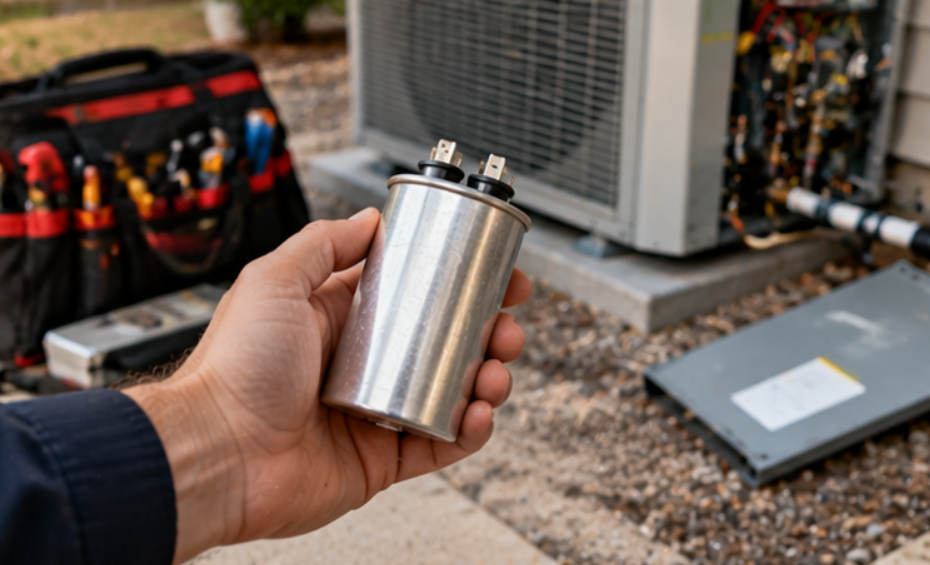
Electrical parts like capacitors, contactors and defrost boards sit near the bottom of that range because they bolt on quickly and nobody touches the refrigerant. A failed outdoor fan motor or aux heat strip sits in the middle, and a reversing valve or compressor sits at the top.
The biggest swing is whether the sealed system gets opened. A part a technician can swap with a screwdriver and meter costs little in labor. That still isn’t a DIY job, since capacitors hold a dangerous charge even with the power off. A part buried in the refrigerant circuit means recovering the charge, making the repair, pulling a vacuum and recharging—hours of skilled time plus material.
So before reacting to a number, find out which category your repair falls into. A quote near the bottom usually means an electrical fix, often worth approving on the spot. A quote near the top means the sealed system is involved, the point to slow down and ask questions, which the next sections help you do.
Why Are Heat Pump Repairs Priced Differently From Furnaces?
A heat pump both heats and cools by moving heat in either direction, giving it parts a furnace lacks. A gas furnace burns fuel and blows the result through your house. A heat pump reverses its refrigerant flow to pull warmth from cold outdoor air, carrying a reversing valve, a defrost system and a hard-working outdoor unit.
Those extra parts are where the extra cost lives. A furnace has no reversing valve and no defrost board to fail, and its burner sits idle through the cooling months. A heat pump runs in both seasons, so it racks up far more operating hours. More running time means more wear and more failures over the same years.
So a heat pump quote isn’t directly comparable to what a neighbor paid for furnace work. Knowing which extra part failed is the first step to judging the quote, so the breakdown below takes them one at a time.
Which Heat Pump Parts Fail, and What Does Each Fix Cost?
Heat pump repair costs depend on which component has failed, the equipment model, and the labor involved. The breakdown below starts with the simplest, lowest-cost repairs and moves toward the jobs that open the sealed system. The ranges are typical industry figures, not quotes; your price depends on the diagnosis, the equipment and the time it takes to reach the part.
Capacitor and Contactor
These are the low-cost electrical parts that start and switch the system, typically about $150 to $400 to replace. A failed capacitor leaves the unit humming but not starting; a burned contactor stops it cold. Both are fast to replace and sit at the very bottom of the range. They also fail often in hard-running conditions.
Defrost Board
The defrost board is the control that tells the outdoor unit when to melt frost off its coil in winter, typically about $200 to $600 to replace. When it fails, the coil ices over and heating output drops. If the ice never clears, switch the system off and call for service rather than chipping at it or pouring hot water on the coil, which can damage the fins and tubing. It is a circuit board that unplugs and swaps, so labor is short and the cost stays modest. Heavy winter cycling in this climate puts steady wear on it.
Outdoor Fan Motor
This is the motor spinning the fan in your outdoor unit, pushing air across the coil, typically about $300 to $700 to replace. When it fails you often hear a hum with no spin, or the unit overheats and shuts down. It is an accessible, bolt-on part, so the cost is mostly the motor itself plus an hour or so of labor.
Auxiliary Heat Strips and Sequencer
These are the electric heating elements in the indoor air handler that back up the heat pump on the coldest nights and during defrost, typically about $250 to $800 to replace depending on how many elements or controls failed. When they fail, the house falls behind on cold nights even though the outdoor unit keeps running. If the thermostat shows aux or emergency heat running for long stretches, that is worth a service call too, because those strips cost far more to run than the heat pump itself.
Refrigerant Leak and Recharge
Refrigerant is the fluid that carries heat through the system; it is not consumed, so if the level is low you have a leak. Finding and sealing the leak, then recovering, evacuating and recharging, typically runs about $250 to $1,500, depending on where the leak is and how much refrigerant it takes. A top-off alone without finding the leak is a short-lived fix, so a proper diagnosis of a refrigerant leak matters more than the recharge price.
Reversing Valve
The reversing valve is what flips the refrigerant flow between heating and cooling. When it sticks, you may get cool air in heat mode or no mode change at all. Because it sits inside the sealed system, replacing it means recovering refrigerant and brazing, which puts it at about $1,000 to $2,000. Before anyone replaces the valve, the solenoid coil that shifts it should be tested. A failed coil is an electrical part that costs a fraction of the valve.
The takeaway is that cost tracks access and refrigerant, not size, so the part named on the quote matters more than the symptom you noticed.
What Does a Compressor Replacement Really Cost?
A compressor replacement is a heat pump’s priciest single repair, commonly $1,500 to $3,500 or more. The compressor is the heart of the sealed system, moving refrigerant and building pressure the cycle depends on. Replacing it means recovering the charge, cutting it out, fitting the new one, pulling a vacuum and recharging—slow, skilled work.
Here is the trap. A humming unit that won’t start often has a failed capacitor or contactor, not a dead compressor, and those cost a fraction as much. Before approving a compressor, ask the technician to confirm with documented electrical readings. Opening the sealed system is restricted work that requires an EPA 608-certified technician.
That reading takes minutes. If a quote jumps straight to the compressor without that test, get a second opinion. When it genuinely is the compressor on an older unit, flexible financing can spread the bill while you weigh repair against replacement.
What Goes Into a Heat Pump Repair Quote?
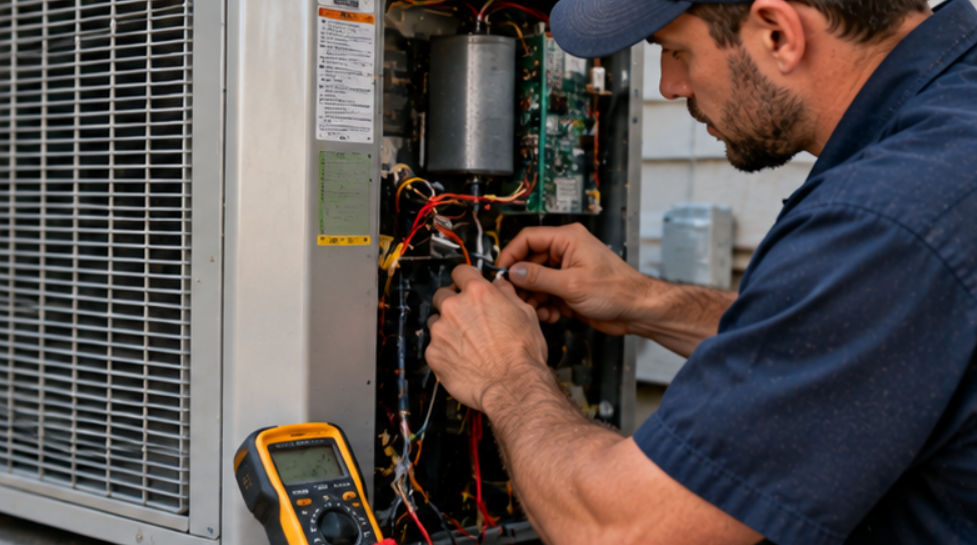
A proper quote starts with a diagnostic step, performed and confirmed before any repair is priced, because approving a big part before the fault is verified is how homeowners overpay. After the diagnostic fee, the quote adds labor and the part itself. At Fortiz HVAC Inc., a diagnosis that runs past the first hour is billed in half-hour blocks, so a hard-to-find fault costs more to pin down than an obvious one.
Billing structure is why two quotes for the identical part can differ entirely. One contractor may bill a diagnostic fee plus a base hour and half-hour increments, another a flat rate, and access to the part changes the hours either way. The part price is usually the small, predictable half of the total.
| Part | Typical cost range |
|---|---|
| Capacitor / contactor | $150 to $400 |
| Defrost board | $200 to $600 |
| Outdoor fan motor | $300 to $700 |
| Aux heat strips / sequencer | $250 to $800 |
| Refrigerant leak repair and recharge | $250 to $1,500 |
| Reversing valve | $1,000 to $2,000 |
| Compressor | $1,500 to $3,500 or more |
Reading a quote this way lets you see where the money actually goes. If two contractors quote the same part at very different totals, the gap is almost always labor structure and access. To compare fairly, ask each one for an itemized estimate covering parts, labor and any extra charges, ask about the warranty, and confirm nothing gets replaced without your approval. The lowest quote is not always the best value if it skips the diagnosis.
Why Do DMV Winters Drive Heat Pump Repairs Up?
According to Weather Spark’s Beltsville climate data, winter temperatures here typically fall toward the high 20s, around 27°F on the colder nights. That matters because a heat pump near those temperatures runs frequent defrost cycles, briefly reversing itself to melt frost off the outdoor coil. Every defrost cycle works the exact parts most likely to fail.
Local homes also lean on the heat pump as primary heat for roughly five months straight, November through March. That continuous runtime means a borderline part rarely limps through the season. It usually fails on the first hard cold snap, which is why repair calls cluster right as heating season starts.
The parts this climate concentrates failures in:
- Defrost board: Constant winter defrost cycling wears the control that triggers each cycle.
- Reversing valve: Repeated flow reversals in cold weather stress the valve that switches modes.
- Outdoor fan motor: Long runtime in freezing, damp air shortens motor life.
- Capacitor: Frequent start cycles under load drive these to fail early.
- Refrigerant seals: Freeze-thaw and vibration can open small leaks over seasons.
So if your heat pump stumbles in the first cold week, that timing is normal here, not a fluke. Catching it early, before a hard freeze forces the issue, usually costs less than waiting, which leads to the harder question of whether to fix it at all.
When Does a Repair Stop Being Worth It?
Heat pumps typically last 12 to 15 years, and that range sets the tipping point. On a unit under about 10 years old with a healthy compressor, repair is almost always the better call. A compressor or reversing valve on a 14-year-old unit, where the repair approaches half the cost of replacement, usually is not. Age and repair size together decide it, not either one alone.
Refrigerant adds pressure to that math. Many existing units run R-410A, a refrigerant now being phased down, which tends to raise recharge costs over time. Units installed before about 2010 may still run R-22, which is no longer produced and costs far more to recharge. A repair needing a recharge today may be more expensive next season, so an aging unit facing refrigerant work weighs further toward replacement.
Weigh it against these before deciding:
- Age past 12 to 15 years: Remaining life is short, so a big repair buys little.
- Repair near half of replacement cost: The money is better put toward new equipment.
- Repeat failures same season: A pattern signals the whole unit is wearing out.
- Refrigerant work on an older unit: Rising R-22 and R-410A costs tilt the math toward replacing.
If the numbers point past repair, that is the moment to price a heat pump installation alongside the repair quote so you are comparing actual figures, not guesses.
Why Choose Fortiz HVAC Inc. for Heat Pump Repair in Beltsville?
Fortiz HVAC Inc. is a family-owned team based in Beltsville, serving homes across Prince George’s and Montgomery counties. Our EPA 608 and NATE certified technicians handle the sealed-system work, like compressors and reversing valves, that the biggest heat pump repairs come down to.
When your heat pump struggles to keep the house warm, the quote should name the actual fault. Our heat pump repair visits test the reversing valve, the defrost board and the refrigerant charge before any part is priced, so you know what you are paying for and why.
The standard diagnostic is $115, or $145 for emergency and after-hours visits, and it comes off the repair when the work is finished on the same visit. For a larger repair or a new heat pump, financing through Wisetack can spread the cost. Call (240) 573-6584 or request an estimate to talk through your system’s symptoms.
Frequently Asked Questions
How much does a heat pump diagnostic visit cost before any repair?
At Fortiz HVAC Inc., it is $115 for a standard visit and $145 for emergency or after-hours calls. That covers testing until the fault is confirmed, and the fee is credited to the repair if the work is finished on the same visit. If diagnosis runs past the first hour, extra time is billed in half-hour blocks.
Is it normal for a repair quote to change after the technician opens the unit?
Yes. A visual diagnosis may point at one part, but electrical readings or a found refrigerant leak can reveal more than the surface showed. A good quote flags that possibility upfront rather than surprising you later. If a quote changes with no explanation, ask exactly what the new reading showed.
Why did two contractors quote very different prices for the same part?
Parts cost is usually similar; labor is where they diverge. One may bill a diagnostic fee plus the first hour and half-hour blocks after, another a flat rate. Access to the part, refrigerant handling, and whether the diagnosis actually matches the symptom all move the final total.
How much of the replacement cost is too much to spend on a repair?
A common rule of thumb is about half. Once a repair approaches 50 percent of what a new heat pump would cost, and the unit is past 12 to 15 years old, replacing usually makes more sense. A small electrical repair on an older unit can still be worth it if everything else is sound.
Does an older heat pump cost more to repair because of refrigerant?
Yes, especially units old enough to run R-22, which is no longer produced, and to a lesser degree R-410A, which is being phased down. The actual cost depends on the refrigerant type, leak location, and amount required. Compare the repair estimate with the system’s age and replacement costs before deciding.


