 Skip to content


You notice one bedroom stays warmer than the rest of the house, airflow from a register feels weaker than it used to, or you find a section of ductwork in the attic that is torn, disconnected, or crushed. Now you have to decide whether the damage calls for a simple repair or a much larger replacement.
That decision matters because not every damaged duct needs to be replaced. A loose connection or small leak may be corrected without disturbing the rest of the system, while widespread corrosion, severely crushed runs, or undersized ductwork can make replacement or redesign more practical. The right choice depends on the condition of the entire system, not just the first damaged spot you can see.
When Does Damaged Ductwork Still Make Sense to Repair?
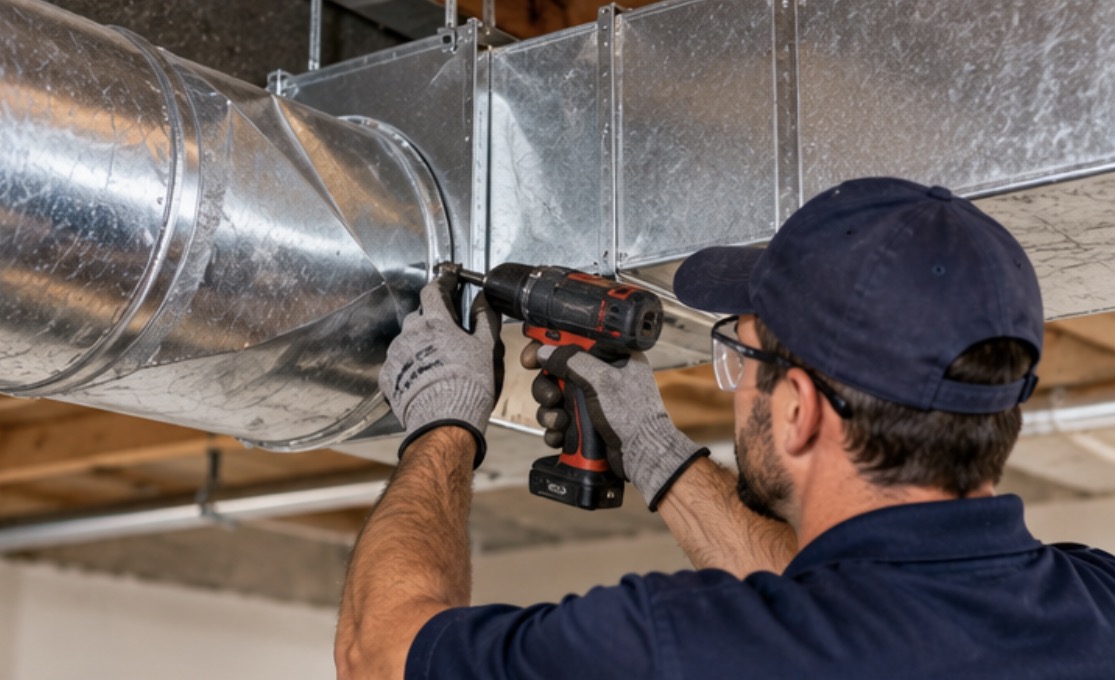
Repair is often the sensible choice when the damage is isolated and the surrounding ductwork is still structurally sound. A disconnected run, failed seam, small puncture, or minor section of damaged insulation does not automatically mean the entire duct system has reached the end of its useful life.
Common problems that may be repairable include:
- Loose or separated duct connections
- Small holes or punctures
- Leaking seams and joints
- One disconnected supply or return run
- Minor damage to flexible duct
- Small sections chewed or torn by rodents or pests
- Damaged insulation around otherwise sound ductwork
The important question is what condition the duct is in underneath the damaged area. If the material is still solid, reconnecting and sealing the section may restore proper airflow without the cost and disruption of replacing a much larger portion of the system.
ENERGY STAR recommends repairing damaged or disconnected ducts and sealing leaks with mastic or metal-backed (foil) tape, not cloth duct tape. It also identifies damaged, poorly connected, or leaky ducts as potential sources of comfort and efficiency problems. (ENERGY STAR)
One safety note for older homes: if your house was built before about 1980, do not cut, sand, or peel old duct insulation or tape yourself. Some older duct materials contain asbestos and should be checked before anyone disturbs them.
What Signs Suggest Your Ductwork Needs More Than a Repair?
Replacement becomes more reasonable when the problem is widespread or the duct material itself has deteriorated. Patching a single hole makes sense when the surrounding duct is healthy. Patching several failing sections year after year is a different situation.
Watch for signs such as:
| Warning Sign | What It Can Indicate |
|---|---|
| Rust or corrosion through several sections | Deteriorating duct material |
| Severely crushed flexible duct | Restricted airflow that sealing cannot correct |
| Multiple disconnected runs | Broader installation or support problems |
| Repeated leaks in the same areas | An unresolved underlying issue |
| Several rooms have weak airflow | Possible larger duct-design problem |
| Repair needs keep increasing | Replacement may provide better long-term value |
The location of the ductwork also matters. A leaking supply duct inside an attic or crawlspace can waste conditioned air before it reaches the living space, while a leaking return duct in the same space can pull hot, humid, or dusty air into the system. ENERGY STAR estimates that typical duct systems can lose roughly 20% to 30% of the air they move through leaks, holes, and poorly connected ducts.
That does not mean every old or leaky duct should be replaced. It means the extent and location of the leakage should be considered before deciding whether continued repairs are worthwhile.
How Does a Technician Decide Between Duct Repair and Replacement?
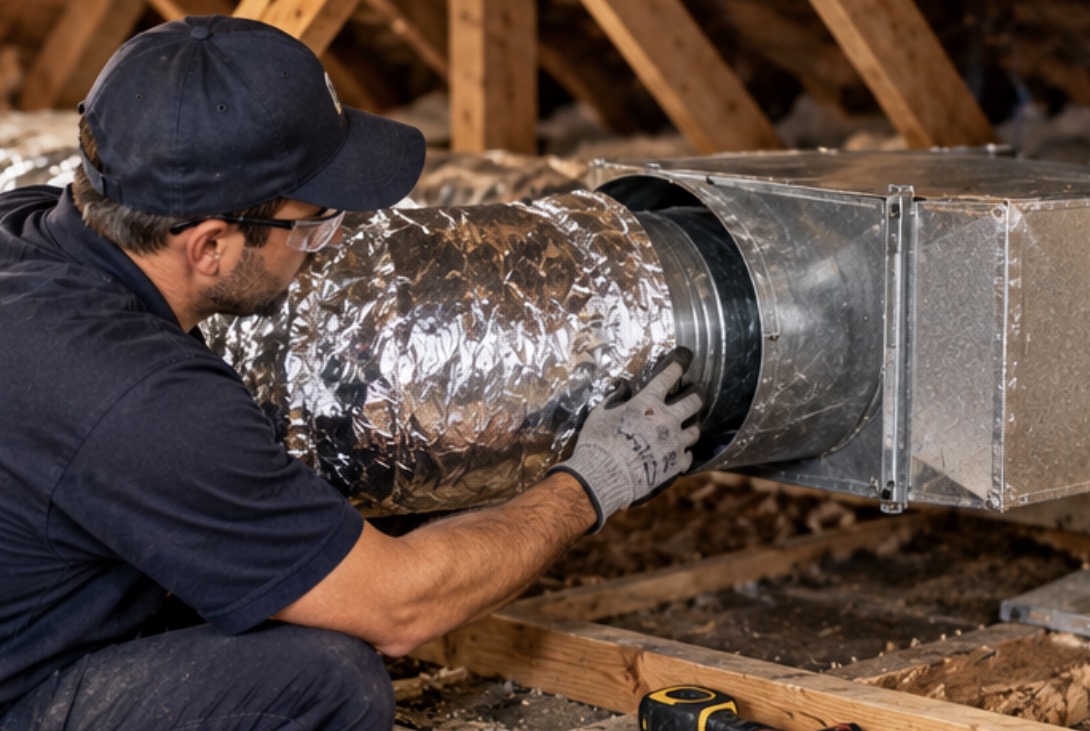
The symptoms inside your home provide the starting point, but they do not prove that the ductwork is the problem. A warm bedroom, weak register, or longer HVAC runtime can also result from a dirty filter, restricted return, blower problem, closed damper, or equipment issue. We cover those other causes in more detail in our guide to uneven home temperatures and ductwork problems.
A proper evaluation should look at the duct material, connections, insulation, supply and return airflow, and the location of the damaged sections. Where appropriate, airflow measurements and air balancing can provide information that simply looking at the ducts cannot.
The technician also needs to determine whether the existing ductwork is properly sized. If a branch is too small for the airflow required by the room, sealing it will not solve the underlying problem. That situation may call for resizing, rerouting, or redesigning part of the duct system instead.
When Is Replacing One Section Better Than Replacing the Entire Duct System?
Homeowners are sometimes presented with two choices that seem unnecessarily extreme: patch the existing system or replace everything. In reality, sectional replacement can be the right middle ground when one or several specific runs have reached the point where repair is no longer practical.
For example, a flexible duct in an attic may be badly crushed or torn while the rest of the home’s ductwork remains in good condition. Replacing that affected run can restore the airflow without removing ductwork that is still structurally sound. The same logic applies in DC rowhomes and older Maryland houses, where supply runs often travel through walls, soffits, and chases rather than an open attic: fixing the one failed run is usually better than tearing into every wall.
The cause of the damage should also be addressed. If the duct was crushed by attic traffic, poorly supported, exposed to repeated physical stress, or installed with an unfavorable route, simply putting another duct in the same location may allow the problem to return.
This is why a good replacement proposal should identify which sections are being replaced and why rather than simply listing “new ductwork” as one large project.
Repair or Replace: Which Option Fits Your Ductwork?
There is no age or damage threshold that automatically determines the answer. The better comparison looks at the condition of the material, how widespread the problem is, whether airflow is adequate, and how much future work the system is likely to require.
| Duct Condition | Likely Approach | Reason |
|---|---|---|
| Loose joint | Repair and seal | Localized connection problem |
| Small hole or puncture | Seal or repair | Surrounding duct remains usable |
| One disconnected run | Reconnect and seal | No reason to disturb the entire system |
| Damaged insulation | Repair or replace insulation | Duct may remain structurally sound |
| Severely crushed flex duct | Replace affected run | Physical restriction may remain |
| Rusted-through section | Replace affected section | Material may not support a durable repair |
| Multiple deteriorated runs | Consider broader replacement | Problems are no longer isolated |
| Undersized duct | Redesign or resize | Sealing cannot increase capacity |
| Widespread leakage | Evaluate replacement | Repeated repairs may become inefficient |
A repair is generally easier to justify when it restores an otherwise usable system. Replacement becomes more compelling when the same problems keep returning, several sections have deteriorated, or the existing design cannot provide the airflow your home requires.
What Should You Ask Before Approving Ductwork Replacement?
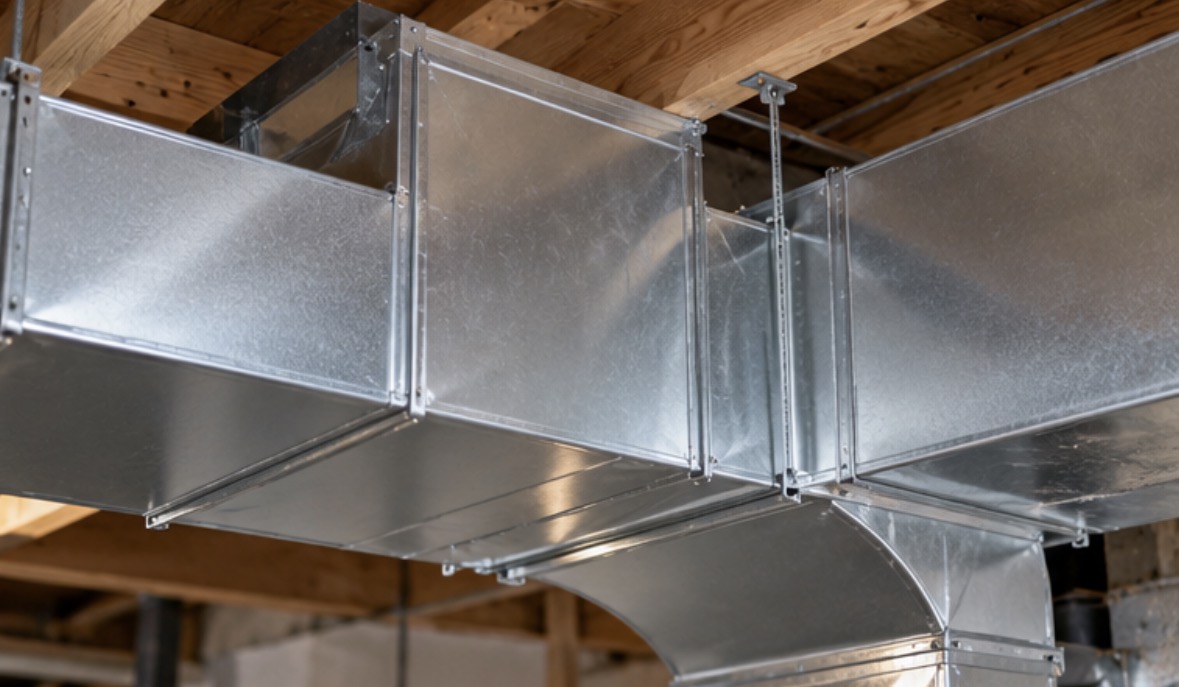
A ductwork replacement quote should explain more than how many feet of duct will be installed. You want to understand what is failing, why repair is not enough, and how the proposed work will change airflow in your home. Before approving the project, ask:
- Which specific sections are damaged beyond repair?
- What did you find that makes replacement necessary?
- Could the affected sections be repaired instead?
- Is poor sizing contributing to the airflow problem?
- How will the new ductwork improve airflow to the affected rooms?
- What parts of the existing ductwork can safely remain?
The answers should make the recommendation easier to understand. If only one run is damaged, you should know why a larger replacement is being proposed. If the problem involves sizing or duct layout, the contractor should explain how the new design addresses that issue rather than simply replacing old material.
FAQs
Can damaged ductwork cause some rooms to feel hotter than others?
Yes. A disconnected, leaking, crushed, or poorly sized duct can reduce the amount of conditioned air reaching a particular room. However, uneven temperatures can also come from return-air restrictions, insulation problems, or HVAC equipment issues, so the ductwork should be evaluated rather than assumed to be the cause.
How long does a ductwork repair usually last?
The longevity of a repair depends on the condition of the surrounding ductwork and what caused the original damage. A properly sealed connection on sound ductwork can provide a durable repair, while patching deteriorated or repeatedly damaged material may only postpone another failure.
Can ductwork be repaired without removing walls or ceilings?
Sometimes. Ducts in attics, crawlspaces, basements, or utility areas can often be repaired without opening finished surfaces. When a damaged run is hidden behind drywall, the wall has to be opened to fix it properly. Fortiz HVAC Inc opens the wall, rebuilds the duct run, and closes the wall back up, so you are not coordinating a separate drywall contractor.
Is replacing ductwork disruptive to the home?
It depends on where the ducts are and how much needs to be replaced. Accessible attic or basement runs usually involve limited work. Ductwork inside walls or ceilings takes more, because the surface has to be opened and closed again. At Fortiz HVAC Inc, the same crew handles the wall access, the duct work, and closing the wall, which keeps the project simpler for you.
Can new ductwork improve airflow even if the HVAC equipment is working properly?
Yes, if the existing duct system is restricting airflow because of poor sizing, damaged runs, excessive leakage, or inefficient routing. In that situation, correcting the ductwork can help the equipment deliver conditioned air more effectively. The HVAC system itself should still be evaluated to rule out equipment-related airflow problems.
Why Choose Fortiz HVAC Inc for Ductwork Repair and Replacement in the DMV?
When ductwork is damaged, you need to know whether a repair can solve the problem or whether replacement is the more practical long-term option. We look at the condition of the ductwork, airflow concerns, and the scope of the damage before recommending the work your home actually needs.
Fortiz HVAC Inc is a family-owned company based in Beltsville, serving homeowners across Maryland, DC, and Virginia since 2019. Founder Hector Alfredo brings more than 20 years of HVAC experience, and ductwork is the work we are known for. Many of our jobs are airflow problems other HVAC companies could not figure out, and when the fix is behind a finished wall, we open it, rebuild the run, and close it back up ourselves. Our licensed technicians handle ductwork problems ranging from disconnected and leaking sections to damaged insulation, airflow restrictions, and more extensive ductwork issues. You can learn more about our ductwork repair services and what we look for when diagnosing damaged ductwork.
If the existing system has problems with sizing, routing, or overall design, repairing individual sections may not provide the result you need. In those situations, we can evaluate whether a redesigned system is more appropriate through our ductwork design and installation services, rather than simply replacing damaged material with the same setup.
If you are dealing with uneven temperatures, weak airflow, visible duct damage, or recurring repairs, we can help you understand whether repair, sectional replacement, or a larger redesign makes sense. Call (240) 573-6584 or book online to schedule an evaluation and find out what your ductwork actually needs.


