 Skip to content


You replaced the HVAC system because the old one was unreliable, yet the upstairs bedroom is still warmer than the hallway, the basement feels noticeably cooler, or one side of the house barely gets enough airflow. The thermostat reaches its setting, but the rooms themselves don’t feel equally comfortable. When those problems continue after a new installation, the ductwork deserves a closer look.
The new equipment may be producing the heating or cooling it was designed to produce, but that conditioned air still has to travel through the home’s existing supply and return ducts. In older DMV homes, those ducts may have been modified for additions, finished basements, converted attics, or room renovations over the years. A new furnace or air conditioner cannot correct a duct that is leaking, restricted, poorly sized, or delivering too little return air to a particular part of the house.
Why Can a New HVAC System Leave Some Rooms Uncomfortable?

A new HVAC system and a home’s ductwork are two connected parts of the same comfort system. During a replacement, the equipment is often upgraded while the existing duct network remains in place. If that ductwork was already distributing air unevenly, the new equipment can inherit the same problem.
This is especially relevant in DMV homes where construction varies considerably from one property to another. A newer home may have a more predictable duct layout, while an older DC rowhouse, a Silver Spring home with an addition, or a Northern Virginia property with a finished basement may have duct runs that were altered long after the original HVAC system was installed.
The important question is not simply whether the new HVAC system is running. It’s whether the right amount of conditioned air is reaching each room and returning to the equipment properly.
- The thermostat reaches 72°F: The thermostat may be satisfied even though a bedroom at the end of a duct run remains several degrees warmer.
- The new equipment runs normally: Normal operation at the equipment doesn’t prove that airflow is balanced throughout the house.
- One floor feels different: Upstairs rooms often have different heating and cooling demands than the main level or basement.
- Some vents feel weak: A restricted, undersized, disconnected, or excessively long duct run can reduce airflow at the register.
- Closing doors changes comfort: A bedroom that becomes stuffy when the door is closed may have inadequate return-air circulation.
This is why installing a higher-capacity HVAC unit isn’t automatically the solution. If the ductwork is the bottleneck, putting more capacity behind the same restriction can leave the underlying comfort problem unchanged.
How Can Existing Ductwork Undermine a New HVAC System?
A new HVAC system can operate correctly while your home remains uneven if the ductwork cannot deliver conditioned air where it is needed. After an upgrade, problems with leaks, restrictions, returns, or distribution can continue affecting rooms that were uncomfortable before.
Leaking Supply Ducts:
A new system can produce properly conditioned air, but a disconnected or leaking supply duct can lose that air before it reaches the room. This is particularly important when ductwork runs through an attic, crawlspace, or other unconditioned area.
Restricted Duct Runs:
If one bedroom still has weak airflow after installation, look at the duct serving that room before assuming the new system is undersized. A crushed flexible duct, sharp bend, or restrictive transition can limit delivery even when the equipment is operating normally.
Insufficient Return Air:
A new system needs both adequate supply and return airflow. If a bedroom becomes noticeably warmer or stuffier when its door is closed, the room may not have an adequate return-air path to allow conditioned air to circulate properly.
Poorly Balanced Distribution:
Renovations, additions, finished basements, and converted rooms can leave older duct systems poorly balanced. A new HVAC unit connected to that same layout can continue sending too much air to some rooms while others remain difficult to cool or heat.
The important point is that a new HVAC system doesn’t automatically correct an existing air-distribution problem. If the equipment is properly selected but certain rooms remain uncomfortable, evaluating the ductwork can reveal where conditioned air is being lost, restricted, or unevenly distributed.
What Should a Contractor Check Before Blaming the New System?
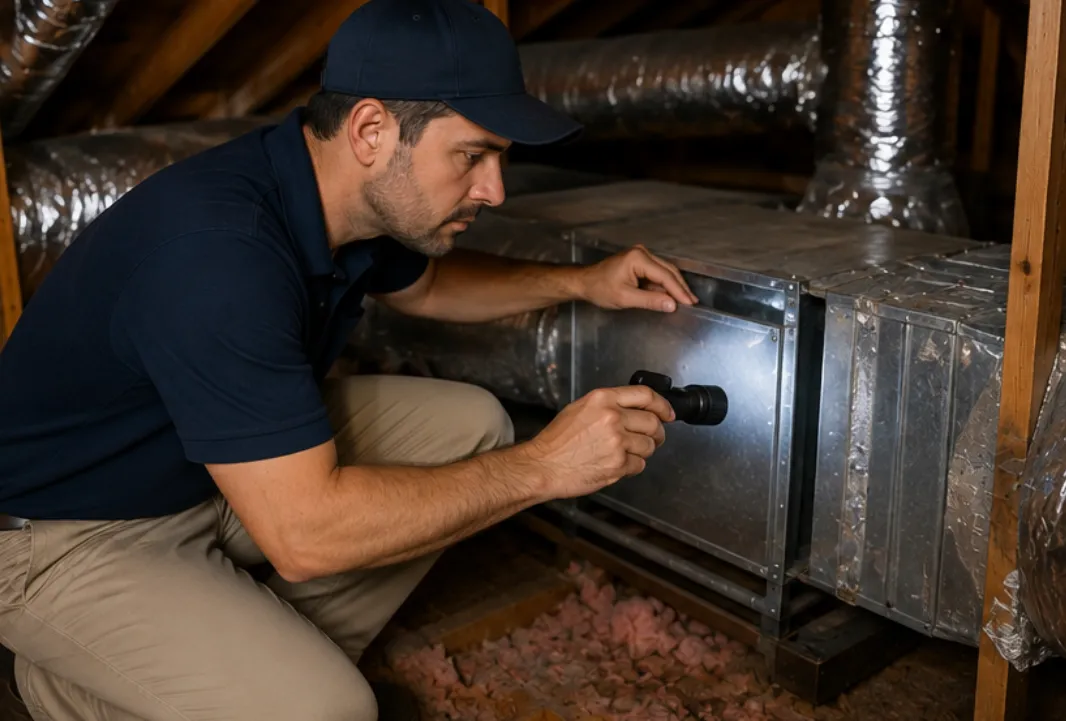
When a homeowner has already invested in new HVAC equipment, the next diagnostic step should be more specific than simply checking whether the system turns on and produces conditioned air. The contractor should determine whether the air being produced is actually moving through the home as intended.
For a DMV home with uneven temperatures after an HVAC replacement, a useful evaluation should include:
- Register airflow: Compare airflow in comfortable and uncomfortable rooms to identify major delivery differences.
- Supply ducts: Check accessible runs for disconnected joints, crushed sections, damaged insulation, and obvious leakage.
- Return-air paths: Determine whether bedrooms and closed rooms have an adequate path for air to return to the HVAC system.
- Static pressure: Measure system pressure to identify restrictions that may be limiting the amount of air the equipment can move.
- Duct layout: Check whether additions, renovations, or long duct runs are contributing to uneven distribution.
- Attic and crawlspace ducts: Inspect exposed ductwork for physical damage, insulation problems, and conditions that can affect delivered air.
- System sizing: Confirm that the new equipment was selected for the home’s actual heating and cooling requirements.
This distinction matters because a new HVAC system should not automatically be blamed when one room remains uncomfortable. The equipment may be operating correctly while the duct system prevents that performance from reaching the living spaces.
For homeowners in the DMV, the most useful diagnosis is therefore not simply “Is the new HVAC unit working?” It is “Is the new HVAC unit delivering the right amount of conditioned air to every part of the home?”
Should You Repair or Replace the Ductwork?
Finding a ductwork problem does not automatically mean the entire system needs to be replaced. In a home with a recently installed HVAC system, targeted duct repairs can often make more sense when the equipment itself is operating properly and only certain sections are causing airflow problems.
The extent of the repair should depend on how widespread the deficiencies are. A single disconnected supply run is a very different project from a duct system with undersized branches, deteriorated insulation, and inadequate returns throughout the house.
- Seal isolated leaks: Accessible joints and connections with measurable leakage may only need proper sealing rather than replacement.
- Replace damaged sections: Crushed or torn flexible duct can restrict airflow enough to justify replacing that particular run.
- Improve insulation: Ducts exposed to unconditioned attic or crawlspace areas may benefit from correcting damaged or missing insulation.
- Modify problem runs: A poorly routed branch serving one consistently uncomfortable room may need to be resized or reconfigured.
- Redesign widespread problems: If the original duct layout is fundamentally inadequate, a broader redesign may be more cost-effective than repeatedly repairing individual sections.
The goal is to correct the part of the duct system affecting comfort without replacing sections that are still performing properly. A targeted repair can make sense when the problem is isolated, while widespread design or deterioration issues may justify a larger ductwork project.
What Should Happen After the Ductwork Is Repaired?
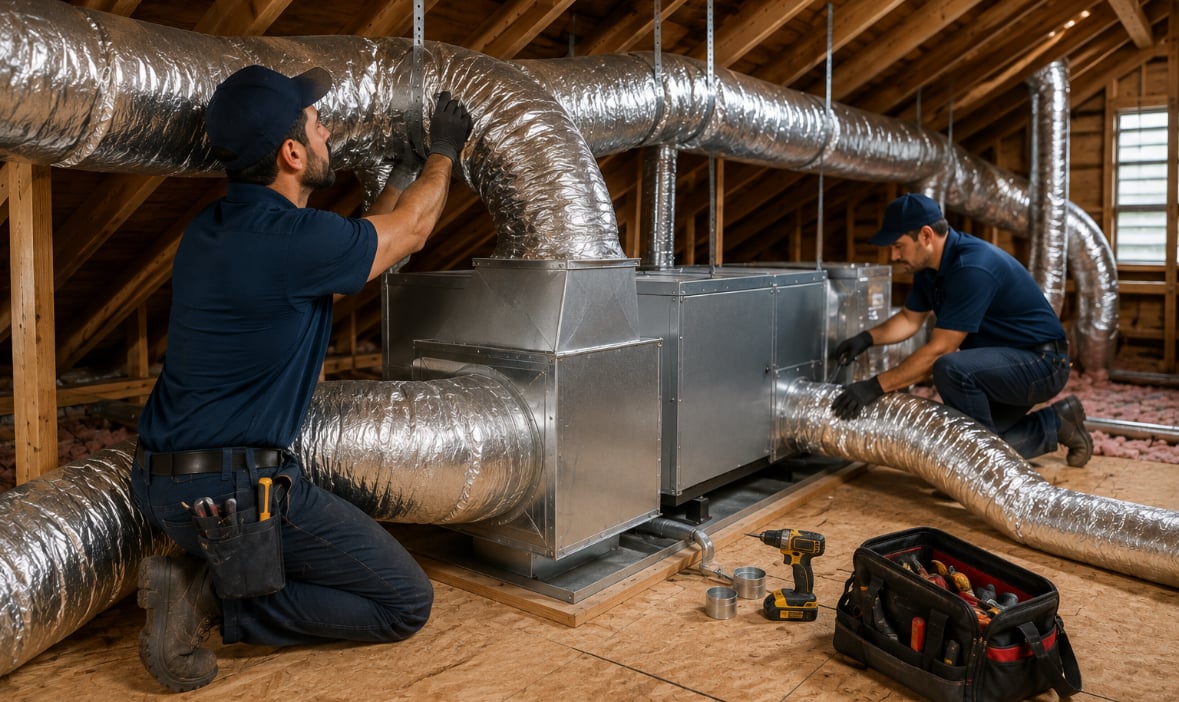
Once the ductwork is repaired, the goal is to see whether the room that was uncomfortable because of poor air delivery is actually receiving more conditioned air. If the upstairs bedroom was several degrees warmer or a back room had weak airflow, those specific problems should be reassessed rather than simply assuming the repair worked.
A proper follow-up should focus on the areas that led to the duct repair in the first place:
- Problem-room airflow: Check whether the previously weak register is now delivering stronger, more consistent airflow.
- Room temperatures: Compare the previously hot or cold rooms with the rest of the home after the system has had time to operate.
- Return-air improvement: If inadequate return airflow contributed to the problem, confirm that the affected room now has a better path for air circulation.
- Duct repair quality: Inspect repaired connections, replaced sections, and insulation to make sure the original problem has actually been corrected.
- System performance: Confirm that the new HVAC equipment is operating normally with the repaired ductwork rather than working against the same restriction.
The important measure isn’t whether the new HVAC system simply turns on and blows cold or warm air. It’s whether the rooms that remained uncomfortable after the installation are now receiving the airflow they were missing. That is what connects the ductwork repair directly to the comfort problem that prompted the service call in the first place.
What Should You Ask Before Approving Ductwork Repairs?
A homeowner who has already paid for a new HVAC system has a legitimate reason to want evidence before approving additional work. Ask the contractor to connect the proposed duct repair directly to the comfort problem you’re experiencing.
Five questions can make that conversation much clearer:
- What did you find? Ask the contractor to identify the specific duct, return, or airflow problem rather than giving you a general explanation about “bad ductwork.”
- How is it affecting my home? The contractor should explain whether the problem is contributing to weak airflow, uneven temperatures, excessive system runtime, or another measurable symptom.
- Can this section be repaired? Not every damaged duct requires complete replacement. Ask whether sealing, insulation repair, or replacing one section can solve the problem.
- What happens if we leave it alone? Understanding the likely effect of leaving the problem unresolved helps you determine whether the repair is urgent or simply an improvement.
- How will you verify the repair? Ask what will be checked after the work is completed so you know whether the proposed solution actually addressed the problem.
These questions also help separate a necessary duct correction from an unnecessary recommendation. A contractor should be able to explain the connection between the defect, the symptom, the proposed repair, and the expected result.
Why Choose Fortiz for Ductwork Problems in the DMV?
If your new HVAC system is running but your home still has persistent hot and cold rooms, the next step should be finding out where the comfort is being lost. Fortiz HVAC serves homeowners across Maryland, DC, and Virginia and approaches ductwork problems by looking at how the equipment and air-distribution system work together.
Our NATE-certified technicians can evaluate airflow concerns and determine whether the appropriate solution is targeted duct repair, improved returns, modified duct runs, or a more comprehensive redesign. That matters when you’ve already invested in a new HVAC system and don’t want to replace equipment that isn’t actually causing the problem.
If the issue is related to the existing duct system, our ductwork services can address the air-delivery side of the problem. If the HVAC equipment itself requires attention, HVAC repair can address the mechanical issue instead. And when you’re planning a future HVAC installation, evaluating the ductwork as part of the project can help prevent the same uneven-comfort problems from carrying into the next system.


This is a great point about how existing ductwork can affect the performance of a new HVAC system. Many homeowners assume that installing newer equipment will automatically solve comfort issues, but leaks, restrictions, and poor return-air circulation can still create uneven temperatures. I especially like the focus on checking airflow throughout the home rather than relying only on the thermostat reading. Evaluating the duct system during an HVAC replacement seems like a practical way to ensure the new equipment actually delivers the comfort and efficiency homeowners expect.