 Skip to content


Property management HVAC service is heating and cooling work set up for the person who manages a rental, not the person who lives in it. One licensed contractor handles repairs, maintenance and replacements across your properties, and every job runs through your account and your approval.
Without that setup, a no-heat call becomes a scramble: a tenant texting you, an unfamiliar contractor, a repair nobody approved and an owner asking about the bill. This guide explains what the service covers, which buildings it fits and how a work order runs, using our process.
What Does a Property Management HVAC Vendor Cover?
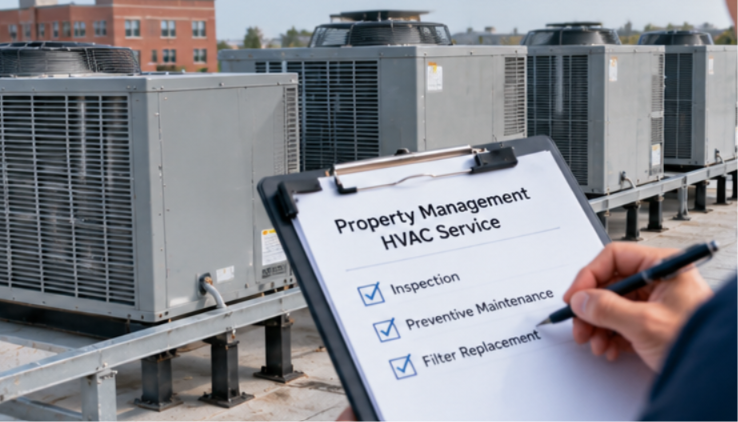
A full-scope vendor covers every system across your portfolio, so you are not keeping a furnace company, an AC company and a duct company on speed dial. Repairs cover any brand as long as parts can be sourced, which matters in rentals where past owners chose the equipment:
- Repairs: Any brand, as long as the parts can still be sourced.
- Installs and replacements: Furnaces, heat pumps and central AC, all done to code.
- Ductwork: Repairs through full design and installation, one of our core strengths.
- Ductless mini-splits: For basements, additions and units without ducts.
- Light commercial packaged units: For offices and small mixed-use buildings.
- Older-building heat: Hydronic and steam boilers, apartment convectors and baseboard heat.
Dryer vents belong on the list more than most managers expect. The U.S. Fire Administration counts about 2,900 residential dryer fires a year, with failure to clean as the leading cause at 34%, which makes dryer vent cleaning at each turnover a cheap safeguard.
How Is It Different From Regular Residential HVAC Service?
The equipment is the same. What changes is who is involved. On a homeowner call, the person paying opens the door, hears the diagnosis and approves the fix on the spot. In a rental, the tenant opens the door, the manager approves and the owner pays.
That changes the paperwork too. Each property sits on your account, filed by address, so the system’s history is on hand before the next call. Invoices are written for an owner who was never on site, with a diagnosis and photos rather than just a total.
Follow-up shifts as well. After an install, the vendor contacts the tenant directly instead of waiting for the tenant to call you. You stay informed about every visit, but you are no longer the person relaying messages between a tenant and an installer about a thermostat.
Which Property Types Does It Cover?
Townhomes, single-family homes and condos make up most of our property management work, with apartment buildings and offices rounding out the list. Each property type brings its own access rules and equipment quirks, and a good vendor plans each visit around them before the technician arrives.
Townhomes
Townhome rentals usually run a furnace or air handler inside and a condenser out back. The catch is the condenser row: several units lined up along a shared wall, often with no label tying each one to its address. Recording which belongs to which saves time later.
Single-Family Homes
Single-family rentals have the most variety. You may find a 20-year-old gas furnace in one and a new heat pump in the next, depending on what each past owner installed. This is where repairs on any brand pay off, since parts availability varies widely.
Condos
Condo systems are often packed into a hallway closet or ceiling space, which makes access the biggest cost factor. Many associations also set contractor rules, such as reserved elevator times, set working hours or a certificate of insurance on file before any work can start.
Apartment Buildings
Older DC and Maryland apartment buildings often run on hydronic or steam boilers, with convectors or baseboard heat in each unit. These need a technician who knows water-side heat, not just ducts. Larger buildings also book work like duct cleaning across every unit at once.
Offices and Light Commercial Buildings
Small offices usually run on packaged units, where the whole system sits in one outdoor cabinet on the roof or a pad. The work order process is the same as for a rental, though visits are scheduled around business hours rather than tenant availability.
In short, the building type decides what kind of technician you need. Before you hand over a portfolio, ask any vendor which of these five property types they service now, and whether their technicians work on steam and hydronic heat as well as forced air.
What If the Building Has No Ductwork?
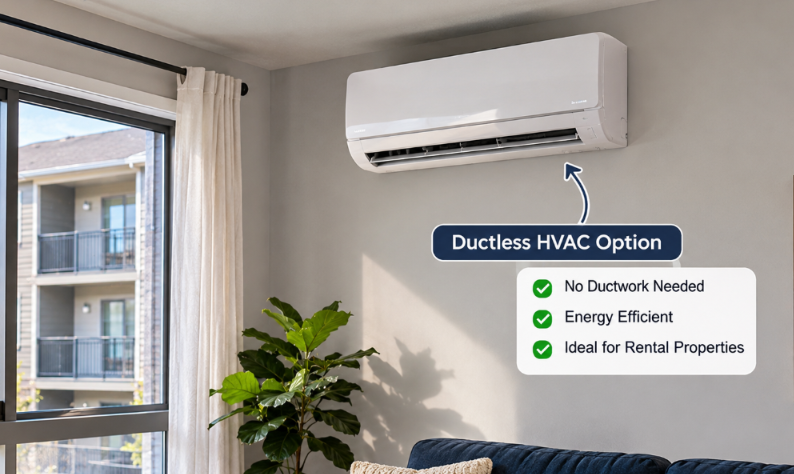
Older apartment buildings and rowhouses often heat with steam or hot water and have no ducts at all, which makes adding central air look impossible. Owners usually assume the only choices are window units or tearing open walls, ceilings and closets across every unit in the building.
This is where most retrofit plans stall. A standard ducted system needs large ducts that rarely fit an older building without major demolition. A small-duct high-velocity system uses flexible tubing that runs through closets and wall cavities instead, and we are a SpacePak certified contractor for exactly that kind of retrofit.
Ductless mini-splits are the other common option, installed room by room or unit by unit. Either way, the existing boiler, convectors or baseboard heat can stay in place for heating. Ask for both options priced side by side before an owner commits to either one.
How Does a Work Order Work With an HVAC Vendor?
The work order flow is what separates an organized vendor from a phone number. A good one quotes the cost before dispatch and stops for your approval before any repair, because unapproved work is how owners end up disputing invoices. This is the process we use:
| Step | What happens | What you get |
|---|---|---|
| 1. The call | You describe the problem, the system’s history and how you heard about us | A booked visit |
| 2. Upfront cost | We quote the service cost before dispatch | No surprise charge |
| 3. Account setup | The address goes under your property management account | One record per property |
| 4. Diagnosis | A technician finds the cause and documents it with photos | A written diagnosis and price |
| 5. Approval | Nothing beyond the diagnosis happens until you say yes | Time to check with the owner |
| 6. The fix | Approved repairs are done the same day unless a part must be ordered | A finished job or a return date |
Owners care most about step 5. It means a $115 diagnostic visit cannot turn into an unplanned major repair while no one with authority is watching, and it gives you time to check with the owner before you commit their money to anything bigger.
What Do DC-Area Heat Laws Mean for Your HVAC Vendor?
Rentals carry legal heat duties that private homes do not. Under DC’s housing code (14 DCMR § 501), landlords who control the heat must keep units at 68°F or warmer from 6:30 a.m. to 11 p.m., and at 65°F or warmer overnight.
Montgomery County’s code sets the same 68°F minimum and requires landlords to provide air conditioning from June 1 to September 30. That turns a no-heat call into a compliance issue, so before you sign with any vendor, check how they handle each of these points:
- No-heat calls: How fast they respond in winter, including after hours.
- Fall heat checks: Furnace, boiler and heat pump checks before heating season starts.
- Spring AC checks: Cooling tested before Montgomery County’s June 1 requirement.
- Parts on order: What they do to keep a unit warm while a part is on the way.
A vendor who plans around these dates saves you from learning about a dead furnace on the first cold night of the year. Book the fall checks in September, before the first cold snap fills every contractor’s schedule across the DC area.
When Does It Make Sense to Use One HVAC Vendor?
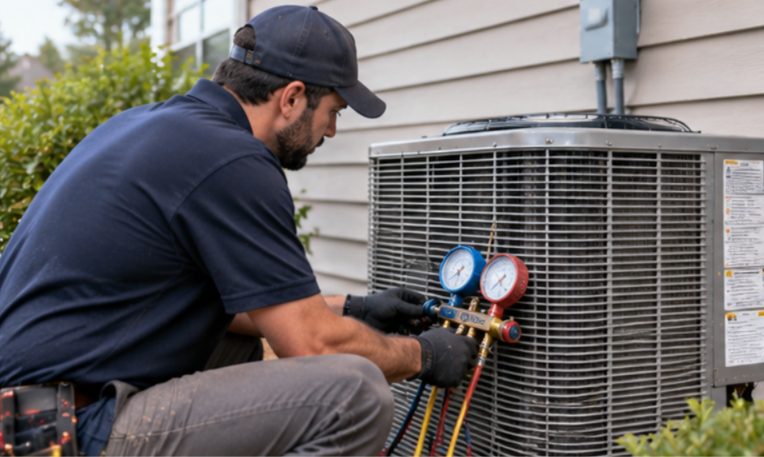
One vendor pays off once you manage more than a handful of doors. Each extra contractor means another scheduling system, another invoice format and another technician who does not know your buildings. You still review invoices and get second opinions on large replacements.
The gain is a primary vendor who already knows the properties. If two or more of the signs below apply to your portfolio, test a vendor on a single property first, then move the rest across once the first few jobs meet your standard:
- Several contractors for one portfolio: You re-explain buildings on every call.
- Invoices owners question: Bills arrive without a diagnosis or photos.
- Tenants relaying through you: Follow-up after installs lands on your desk.
- Older buildings in the mix: Your current vendor cannot service steam heat.
Why Choose Fortiz HVAC Inc. for Property Management HVAC?
Fortiz HVAC Inc. is a family-owned HVAC company based in Beltsville, founded in 2019 by a father and his two sons, with more than 20 years in the trade behind it. The family still runs the business, so the people you call are the people who answer for the work.
We hold master and journeyman licenses, and every installation is completed to code. From air conditioning installation and furnace installation to servicing decades-old steam boilers, we provide HVAC support for townhomes, condos, apartment buildings, and offices. You can work with one vendor across different property types and equipment, with a consistent work-order process for every job.
If you manage rentals in Washington, DC, Prince George’s County, Montgomery County, or Northern Virginia, request the Fortiz vendor packet to learn how we set up property management accounts. You can also call (240) 573-6584 to discuss your first property with our team.
Frequently Asked Questions
What is property management HVAC service?
It is heating and cooling service set up for people who manage rentals. One licensed vendor handles repairs, maintenance and replacements across your properties. Each address sits on your account, pricing is stated up front, and no work starts until the property manager approves it.
What does an HVAC vendor do for property managers?
A vendor covers repairs on any brand where parts can be sourced, installs and replacements, ductwork, dryer vent cleaning, ductless mini-splits and packaged units. A full-scope vendor also services older systems like steam boilers, convectors and baseboard heat, so you need only one contractor.
What HVAC services do property management companies need?
Most need repairs, seasonal maintenance and replacements across several building types, plus documentation an absent owner can read. Upfront pricing, approval before any repair, and records kept by property address matter as much as the repair work itself for a property management company.
Is HVAC for rental properties different from homeowner service?
The equipment is the same, but the people change. The tenant provides access, the property manager approves the work and the owner pays. Records are kept by property address, and every invoice includes a diagnosis and photos for an owner who was never on site.
How does a work order work with an HVAC vendor?
You call with the problem, the vendor quotes the service cost, and the property is set up on your account. A technician diagnoses the fault, you approve the repair, and the work is done the same day unless a part has to be ordered.


