 Skip to content


When an HVAC system fails at a rental property, the repair itself is only one part of the problem. You have to arrange access with the tenant, coordinate the technician, get the diagnosis, obtain the owner’s approval, and make sure the work is completed. If your HVAC contractor is difficult to reach, misses arrival windows, or sends invoices without enough detail, even a routine repair can take more time than it should.
Now imagine handling those same responsibilities across several properties, each with different equipment and maintenance needs. The right HVAC partner can take much of that coordination off your plate. From reliable scheduling and detailed job reports to tenant follow-ups and fair replacement recommendations, the way a contractor handles everyday service can directly affect how efficiently you manage your portfolio.
How Does One HVAC Vendor Save a Property Manager Time?
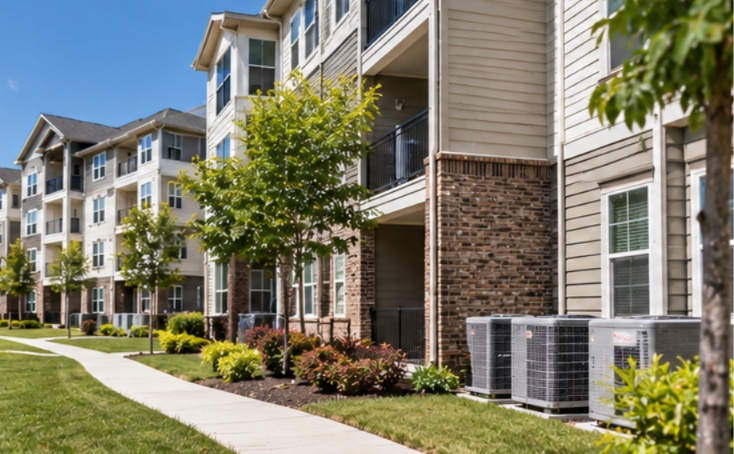
Most of the time an HVAC problem costs you goes into coordination, not the repair itself. You call around, explain the building, chase an arrival time, update the tenant, then chase the invoice. Every extra vendor on your list repeats that same loop from the start.
One vendor shortens the loop. Your properties sit on one account, so system history, access notes and past repairs are already on file when a tenant calls. The technician arrives knowing the equipment, and you stop re-explaining the same building every time something breaks.
Speed matters more in a rental than in a private home. DC and Montgomery County both set minimum indoor temperatures that landlords must meet, so a no-heat call cannot wait while you search for a contractor.
Why Do Property Managers Need an HVAC Company of Their Own?
A homeowner is home when the technician arrives, hears the diagnosis and approves the fix on the spot. A property manager usually is not there. The tenant opens the door, the owner pays the bill, and you sit in the middle, answering to both of them.
That changes what good service means. A contractor who works fine for a homeowner can become a problem in a rental if they repair without asking, leave a one-line invoice, or let every tenant question flow straight back to your phone and inbox.
So the test for a property management vendor is different. You are judging habits as much as repair skill, because habits decide how much of each job lands on your desk. The five habits in the next section matter most, and each one is easy to check.
What Should a Good HVAC Partner Do on Every Job?
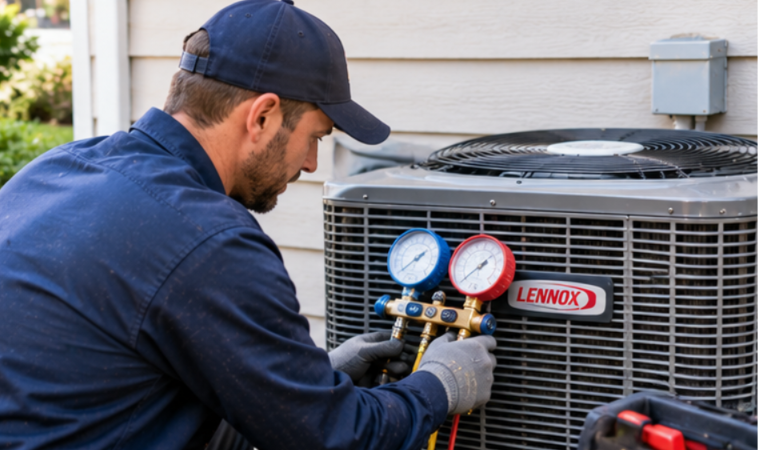
A property management vendor earns its place through habits that repeat on every visit, not through one good repair. These five are the ones we build into each property management job, and they are the ones worth asking any vendor about before you sign on.
Arrive at the Start of the Window
A missed window means a tenant who took time off for nothing, an angry call to you and a second visit to book. Our rule is simple: “If we say 8 to 10, we’re there by 8.” That gives the technician the whole slot to finish.
Wait for Your Approval
A vendor who fixes whatever they find and then sends the bill saves you one phone call and costs you a hard talk with the owner. We quote the service cost up front, document the problem, and do no work without the property manager’s approval.
Photograph and Diagnose Every Job
Every invoice we send includes photos and a thorough written diagnosis. An owner who was never on site can see what failed and why. You can approve a repair from your desk, and you have a record ready when a repair is questioned later.
Send a Maintenance Checklist Report
Maintenance visits come with a checklist report sent alongside the invoice. It shows how the system is actually performing, not just the balance due. Owners can watch a problem develop and budget for it before it turns into an emergency call from a tenant.
Respect the Tenant’s Home
Tenants judge you by who you send into their home. Our technicians wear shoe covers in every home, arrive in uniform and treat tenants politely from start to finish. A careless visit becomes a complaint against the property manager, not against the contractor who caused it.
Put simply, a vendor’s habits matter more than its price list. Each habit above either saves you a phone call or creates one, and across a full portfolio those calls add up to the difference between two vendors charging similar rates.
Who Handles Tenant Calls After an HVAC Install?
A new system goes in, and a few days later the tenant calls you about the thermostat, a warm bedroom or a noise they never heard before. Now you are relaying messages between a tenant and an installer, for work that was supposed to be finished.
The gap is in the quote. Most install quotes say nothing about what happens after the technicians leave, so the follow-up defaults to you. After an install, we contact the tenant directly, and if there is an issue with the new install, we fix it at no charge.
Before you approve any install, ask the vendor these questions and get the answers in writing. Vague answers usually mean the follow-up will land on your desk, and the tenant will learn to call you first about every small issue with the new system:
- Will your team contact the tenant after the install?
- Who does the tenant call if the new system acts up?
- Are install-related fixes covered at no charge?
- How will you tell me a follow-up visit happened?
What Should Owners See on Every HVAC Invoice?
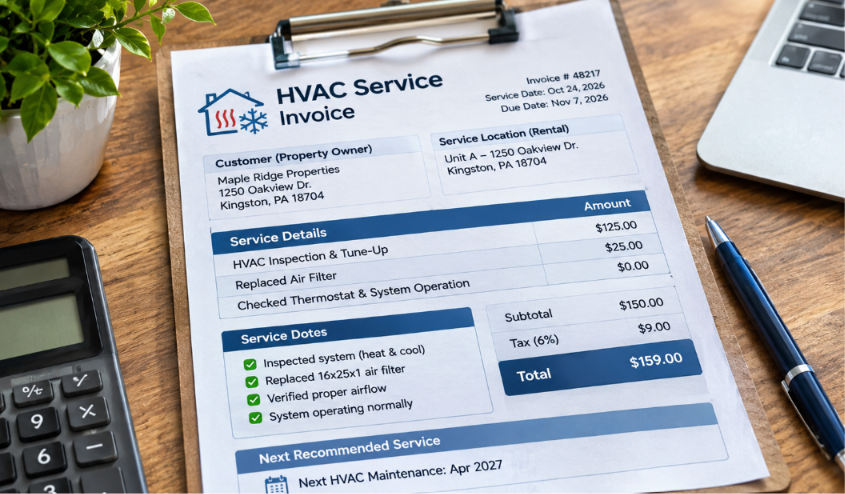
Owners who were never on site still pay the bill, and they deserve to see why. An invoice that says only “HVAC repair” above a total leaves you answering questions you cannot answer, and it gives the owner no record of the equipment’s condition.
A complete service record from any HVAC contractor for rental properties should include each item below. Ask for a sample invoice before you sign on, because the quality of that paperwork tells you how organized the rest of the service will be:
| On the invoice | Why it matters to the owner |
|---|---|
| Written diagnosis | Explains what failed and why, in plain language |
| Photos | Shows equipment the owner will never see in person |
| Work performed | Confirms the approved repair is the one that was done |
| Maintenance checklist report | Tracks how the system performs from visit to visit |
| Recommendations | Flags what to budget for next |
That record pays off when an owner questions a repair, when management changes hands, or when you are deciding whether a 15-year-old furnace deserves another fix. Without that paper trail, each of those decisions starts from guesswork instead of from the system’s actual history.
How Do You Test a New HVAC Vendor?
You do not need to move your whole portfolio to find out whether a vendor fits. Give them one property and one job, then watch the details of that first visit closely, because a trial job shows you more than any sales call or brochure can.
The first visit shows how the vendor schedules, communicates, treats the tenant and documents the work. Score it on the five points below, and repeat the check on the next two or three jobs before you move any more properties across:
- Arrival: Did they show up at the start of the window or the end?
- Approval: Did they stop and ask before any repair beyond the diagnosis?
- Paperwork: Did the invoice include a written diagnosis and photos?
- Tenant care: Shoe covers, a uniform and a polite technician?
- Follow-through: If something was not right, did they come back unprompted?
Also watch how a vendor reacts to competition. We offer free second-opinion estimates on replacements, and we tell property managers plainly: “You have more than one vendor, and that’s fine.” A contractor who pushes back on a second opinion is telling you something.
Why Does a Long-Term Vendor Relationship Pay Off?
Each visit adds to the record on your account, and a technician who has seen a system three times makes better calls than one seeing it cold. Over time, that history shows which systems are close to replacement, so owners can budget ahead instead of paying in January.
Long relationships also open up work that is hard to book one call at a time. One large apartment building we serve orders bulk duct cleaning across its units as a single project. On older equipment, a long-term relationship also comes with protections:
- Repair refund: If a repair on an old system does not hold, we offer to refund the repair cost.
- Free choice: The owner is free to pick any contractor for the replacement.
- Second opinions: Free second-opinion replacement estimates, whenever you want one.
- Building history: Records that carry over even when your own staff changes.
The relationship can also outlast the people in it. When staff changes or a property changes hands, the service records and equipment history let the next team pick up where the last one left off. One management company that took over a property found us through the service sticker on a unit we had installed years earlier, and the install did the introducing.
Why Choose Fortiz HVAC Inc. as Your Property Management HVAC Partner?
Fortiz HVAC Inc. is a family-owned company based in Beltsville, started in 2019 by a father and his two sons. Our team holds master and journeyman licenses, and every install is done to code.
Fortiz serves townhomes, condos, apartment buildings and offices across DC, Prince George’s County, Montgomery County and Northern Virginia. Every habit in this guide is standard on every Fortiz job, from ductwork and furnace repair to the steam boilers and convectors found in older buildings.
Request the Fortiz vendor packet to see how we set up property management accounts, or call (240) 573-6584 to set up your first property. We will walk you through the work order process and put your first address on file.
Frequently Asked Questions
Why do property managers need an HVAC company?
A dedicated HVAC company keeps every property on one account, so system history and access notes are on file before the technician arrives. That cuts the calling around, re-explaining and invoice chasing that come with hiring a different contractor each time something breaks.
How do you choose an HVAC vendor for property management?
Start with one property and one job. Check that the technician arrives on time, asks for approval before any repair, respects the tenant’s home and leaves an invoice with photos and a clear diagnosis. Then ask how they handle tenant follow-up after installs.
Is it okay to use more than one HVAC vendor?
Yes. Many property managers keep a primary vendor and a backup, and get second opinions on large replacements. We offer free second-opinion replacement estimates for exactly that reason. A good vendor earns more of your work through results, not by asking for exclusivity.
What happens if an HVAC repair on an old system fails?
It depends on the vendor, so ask before you approve the repair. With us, if a repair on an older system does not hold, we offer to refund the repair cost, and the owner is free to choose any contractor for the replacement.
Do HVAC contractors for rental properties contact tenants directly?
Some do, and it saves property managers a lot of relaying. After an install, we contact the tenant directly to check on the new system and fix any install issue at no charge, while keeping the property manager informed of every visit.


